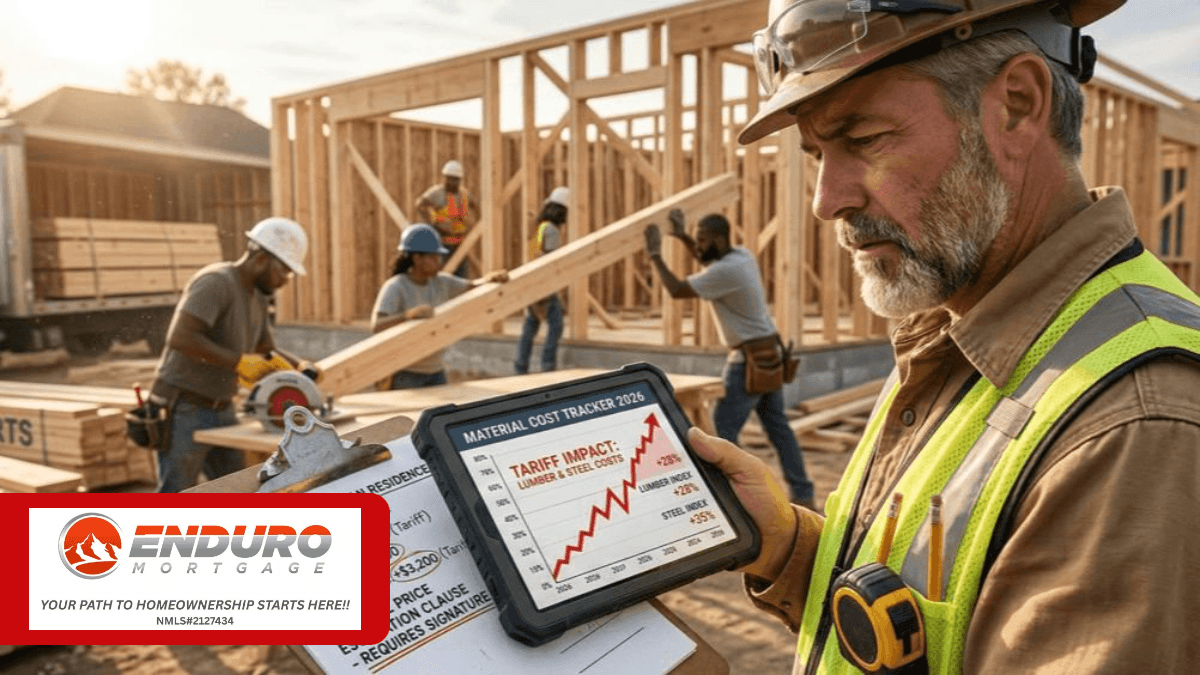
If you’ve walked a job site lately, you know the atmosphere has shifted. It’s not just the usual hum of saws and hammers; there’s a new layer of "what if" hanging over every estimate and supply order.
As we move through 2026, the construction industry is navigating one of the most significant trade shifts in a generation. With broad tariffs now firmly in place on imports from key partners like Canada, Mexico, and China, homebuilders and general contractors (GCs) are finding that the rules of the game have changed overnight.
Here is a breakdown of how these tariffs are hitting the ground and what you can do to protect your margins.
The most visible impact is, unsurprisingly, the cost of materials. For years, the U.S. has relied on a global pipeline for the "Big Four": lumber, steel, aluminum, and gypsum. According to recent estimates from the National Association of Home Builders (NAHB), these trade policies have added an average of $11,000 to the cost of a new single-family home. For a general contractor, this isn't just a rounding error—it’s the difference between a profitable project and a break-even one.
Softwood Lumber: With Canada being a primary source, any tick upward in tariffs hits framing costs instantly.
Finishing Goods: It’s not just the bones of the house. Tariffs on Chinese imports have squeezed the pricing on "last-mile" items like kitchen cabinets, bathroom vanities, and high-end appliances.
For decades, the fixed-price contract was the gold standard for residential builds. In 2026, that model is under extreme pressure.
When a tariff is announced or adjusted, material prices can jump 15–25% in a single week. GCs who signed contracts three months ago are now watching their profit margins evaporate as they pay "today’s prices" for "yesterday’s bids."
Pro Tip: Many builders are now moving toward Cost-Plus contracts or insisted on Material Price Escalation Clauses. These allow for price adjustments if key materials (like steel or copper) exceed a specific percentage increase during the build.
Tariffs don't just make things more expensive; they make them harder to find. When importers face 25% duties, they may pause shipments to renegotiate or wait for a policy "cooling-off" period.
For a contractor, this means "out of stock" notifications on essential items like electrical components or specialized HVAC units. Lead times that used to be four weeks are stretching to twelve, throwing entire project schedules—and your sub-contractors' availability—into chaos.
It’s not all doom and gloom. The primary goal of these tariffs is to encourage "Made in America" production. We are seeing:
Increased Domestic Capacity: U.S. steel and aluminum mills are ramping up production to meet the demand that used to go overseas.
Near-Sourcing: Contractors are looking for local suppliers who aren't subject to international trade winds, leading to more resilient, if initially more expensive, supply chains.
If you're a builder or GC trying to stay solvent, sitting back isn't an option. Here’s the "2026 Playbook":
Audit Your Contracts: If you don't have a "Force Majeure" or "Price Escalation" clause that specifically mentions trade policy or tariffs, get one drafted immediately.
Pre-Purchase Materials: If you have the storage space, "buying the job" upfront is one of the only ways to lock in your costs.
Over-Communicate with Owners: Clients are hearing about tariffs in the news. Be transparent. Show them the price indices for lumber and steel so they understand the "why" behind your revised estimate.
Tariffs have introduced a new era of volatility in construction. Success in 2026 isn't just about who can build the best house—it's about who can manage the most risk. By staying agile, updating your contracts, and looking closer to home for your materials, you can keep your projects moving forward even when the trade winds are blowing hard.
Do you need a financing solution to keep your projects on track? We can help!
Representing: Enduro Mortgage, Colorado Mortgage Company Registration
NMLS# 2127434 Regulated by the Division of Real Estate
EQUAL HOUSING OPPORTUNITY https://nmlsconsumeraccess.org